Easton Or Bethlehem: Which Fits Your Home Search
Trying to choose between Easton and Bethlehem can feel harder than it looks on paper. Both cities offer historic character, walkable areas, and a strong sense of place, but they do not live the same way day to day. If you are weighing budget, commute, lifestyle, and housing style, this guide will help you compare the details that matter most to your home search. Let’s dive in.
If your first question is price, Easton currently offers the lower entry point. Redfin reported an April 2026 median sale price of $261,365 in Easton compared with $317,836 in Bethlehem. Census QuickFacts also shows a lower median value for owner-occupied homes in Easton at $196,300 versus $260,400 in Bethlehem.
That difference can shape your options right away. If you want city living at a lower price point, Easton may give you more room to enter the market. If you are comfortable stretching higher for a different mix of amenities and commute patterns, Bethlehem may feel like the better fit.
For many buyers, budget is where the decision starts. Based on the recent sold-price and housing-value data in the research, Easton comes in below Bethlehem on both measures. Median gross rent is also slightly lower in Easton at $1,325 compared with $1,382 in Bethlehem.
That does not mean one city is universally “better” than the other. It means your buying power may look different depending on where you focus. In practical terms, Easton may appeal to buyers who want a lower-price entry point, while Bethlehem may require a higher budget for comparable city living.
A lower price point can affect more than your monthly payment. It may also influence the type of home you consider, how much flexibility you have for updates, and whether you feel comfortable staying within your target budget.
If you are a first-time buyer or simply trying to keep your options open, Easton’s current pricing may make the search feel more manageable. If your priority is a different amenity mix and you are prepared for a higher cost, Bethlehem may still be the right move.
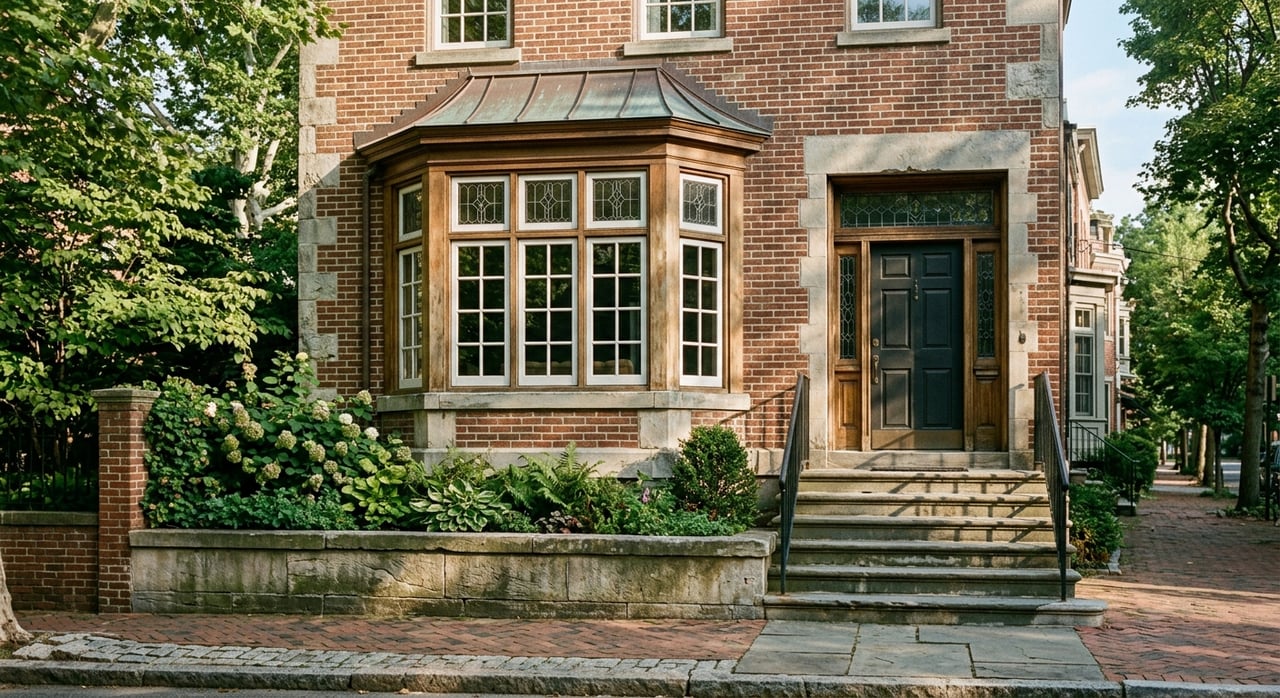
Both Easton and Bethlehem have formal historic-preservation frameworks, which matters if you are drawn to older homes or are thinking ahead about exterior changes. In Easton, the local historic district was created in 2005 and is roughly bounded by the Delaware River, Bushkill Creek, Sixth Street, and the Lehigh River. Bethlehem has three special districts that require a Certificate of Appropriateness.
From a home-search perspective, Easton has a more concentrated preservation overlay in its historic core. Bethlehem has a more layered preservation map across several districts. If you love the look and feel of older homes, that is worth keeping in mind before you make an offer.
Historic districts can help preserve the look and feel of certain blocks, but they can also affect what owners can do to a home’s exterior. That may include changes to windows, doors, facades, or other visible features, depending on the district and the work involved.
For buyers, the key takeaway is simple. If you are considering an older property in either city, make sure you understand whether it sits within a local historic district and what that could mean for future improvements.
Your daily routine may feel very different in Easton versus Bethlehem. Census estimates show Bethlehem with a shorter average commute at 22.1 minutes, compared with 27.8 minutes in Easton. That gap may matter if commute time is high on your list.
At the same time, the two cities emphasize mobility in different ways. Easton highlights access to Interstate 78, Route 22, Lehigh Valley International Airport, a downtown intermodal facility, and walking and biking trails. Bethlehem’s planning language places more emphasis on complete streets and a broader trail system that includes Monocacy Way, Sand Island Trail, South Bethlehem Greenway, and South Mountain Park.
Easton may stand out if you want strong regional access. Its transportation profile is closely tied to major roads, airport access, and intermodal connections, which can be helpful if your routine regularly takes you beyond the city.
That can make Easton especially appealing if you value convenience for regional travel along with a compact downtown environment. It offers a mix of local walkability and practical access outward.
Bethlehem may feel like a stronger match if your focus is a shorter average commute and a city layout that emphasizes circulation for pedestrians, cyclists, transit riders, and drivers. The trail network also adds another layer to how you move through the city.
If you picture yourself using trails or navigating several established districts as part of daily life, Bethlehem may line up well with that vision. It offers a mobility pattern that feels broader across the city itself.
The biggest difference for many buyers comes down to how each city feels when you are off the clock. Easton’s lifestyle profile is strongly shaped by its downtown market culture and arts corridor. The city highlights the Easton Farmers’ Market, Easton Public Market, Karl Stirner Arts Trail, Crayola Experience, and Nurture Nature Center.
Bethlehem offers a wider and more event-driven amenity mix. The city points visitors toward the Moravian District, Southside Arts District, museums, tours, and year-round events. ArtsQuest reports more than 4,500 programs, festivals, and events per year, and Musikfest draws more than 1 million people annually.
Easton may appeal to you if you want a smaller downtown experience centered on markets, trails, and a compact street grid. It is also denser than Bethlehem, with 6,597.9 people per square mile compared with 3,964.5. That supports the feel of a more compact city core.
If you enjoy the idea of local markets, an arts trail within walking distance of downtown, and a tighter urban rhythm, Easton may feel more immediately personal and easy to navigate. For some buyers, that compactness is a major advantage.
Bethlehem may fit better if you want a broader spread of districts and a larger cultural calendar throughout the year. Its identity is tied not just to historic areas, but also to the volume and variety of events available across the city.
If you like having more choices for festivals, arts programming, tours, and district-based exploring, Bethlehem may offer the pace and range you are looking for. It can feel like a bigger stage for city living.
If you are narrowing the decision, it helps to focus on the lifestyle you want to live, not just the home you want to buy. Easton is generally the better fit for buyers who prioritize a lower entry price, a tighter historic core, and a downtown experience centered on markets, trails, and compact city living.
Bethlehem is generally the better fit for buyers who are comfortable paying more for a shorter average commute, a larger event calendar, and a more layered historic-district structure. Neither choice is one-size-fits-all. The better city is the one that matches your budget, pace, and priorities.
If you are actively searching, try comparing Easton and Bethlehem through a few simple questions:
These questions can quickly bring your priorities into focus. Once you know what matters most, the right city often becomes much clearer.
Choosing between Easton and Bethlehem is really about choosing the setting that fits your life best. If you want help comparing neighborhoods, understanding local pricing, or sorting through the tradeoffs in your search, BHHS Paul Ford Realtors - Clay Mitman can help you make a confident move.
Every detail is approached with care, discretion, and a strong understanding of the market. Serving Easton, Western New Jersey, and Pennsylvania, BHHS Paul Ford Realtors guides each transaction with precision and a client-first mindset. Leveraging decades of experience, they anticipate challenges, provide tailored solutions, and deliver results that inspire confidence at every step.
BHHS Paul Ford Realtors
126 Bushkill St, Easton, PA 18042