Evaluating Bethlehem For Long-Term Rental Investments
If you are thinking about buying a long-term rental in Bethlehem, it is easy to see the appeal. The city has a tight rental market, a strong regional identity, and several built-in demand drivers that can support steady occupancy. At the same time, Bethlehem is not a market where you can rely on broad assumptions and hope the numbers work. This guide will help you evaluate where the opportunity is, what risks to watch, and how to think more carefully about rental investments in Bethlehem. Let’s dive in.
Bethlehem gets attention because it offers a mix of size, stability, and tenant demand. The city’s 2025 population estimate is 75,795, and its 2020 Census population was 75,781. That gives you a mid-sized city with an established housing base rather than a market driven by one short-term trend.
The renter profile also matters. The Census Bureau reports a 49.9% owner-occupied housing unit rate for 2020 through 2024, which points to a city that is fairly balanced between owners and renters. Median gross rent is $1,382, and Bethlehem’s own housing strategy says the city is dealing with a crisis-level 2% vacancy rate and a clear need for more rental housing.
For a buy-and-hold investor, that combination can be attractive. Tight vacancy often signals durable rental demand, but it does not remove the need for careful underwriting. In Bethlehem, the details behind each address can change your numbers in a big way.
One of the biggest mistakes you can make is treating Bethlehem like a single, uniform rental market. It is more accurate to think of the city as a collection of micro-markets shaped by location, property type, tenant profile, and parcel-level tax differences. That is especially important if you are comparing homes near downtown, the South Side, or more neighborhood-based residential areas.
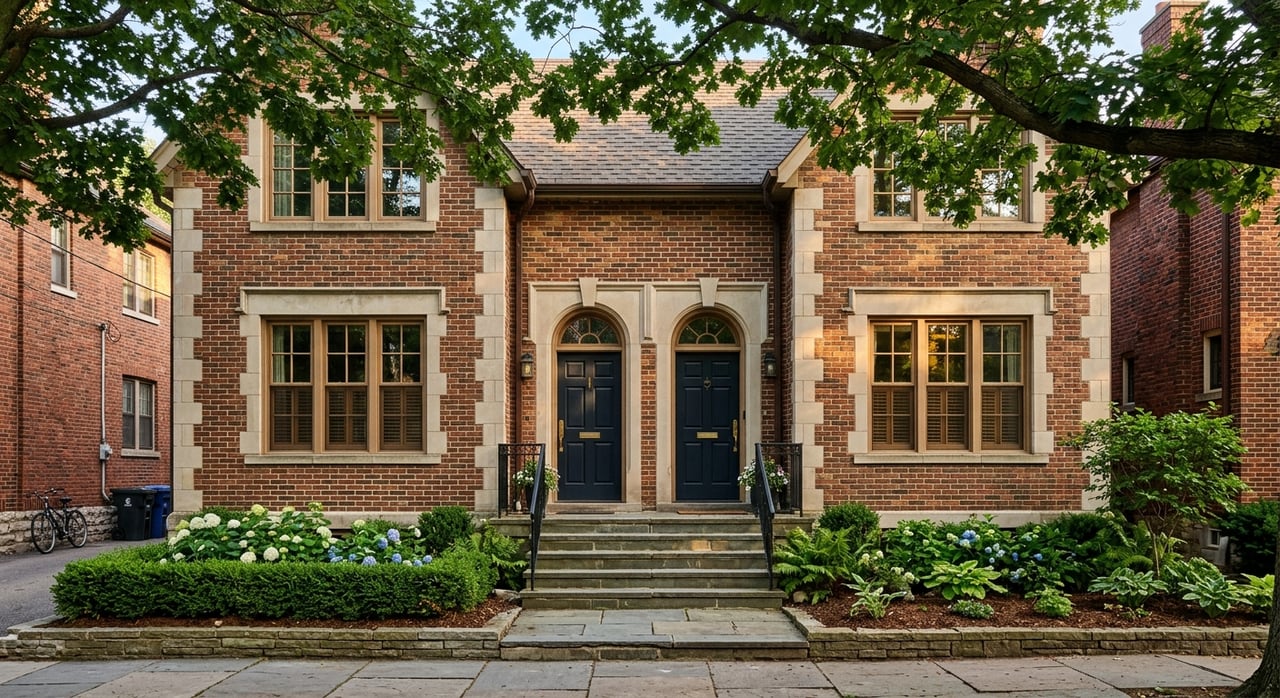
Property types also vary. Bethlehem’s rental stock is best understood as a mix of older urban housing and neighborhood-scale residential product, with common formats including single-family homes, twins or duplexes, rowhouses, and small multifamily buildings. That means your investment plan should match the block and building, not just the city name on the listing.
A college-adjacent property may perform very differently from a workforce rental in another part of the city. A historic home may attract strong tenant interest but require more planning and reserves. In short, the best investment lens in Bethlehem is local, specific, and conservative.
Bethlehem spans two counties, and that matters more than many first-time investors expect. The city says about one-third of its area is in Lehigh County and about two-thirds is in Northampton County. Assessments are handled separately, and both city taxes and school taxes vary depending on which county the parcel is in.
For 2026, the City of Bethlehem real estate tax millage is 6.21 for parcels in Lehigh County and 19.64 for parcels in Northampton County. Bethlehem Area School District’s 2026 to 2027 millage is 20.33 in Lehigh County and 65.53 in Northampton County. Those are meaningful differences that can affect your monthly cash flow and long-term return.
That is why you should never underwrite a property as simply being in Bethlehem without confirming the exact parcel location. Two homes with similar rents and similar prices can produce very different results once taxes are factored in. In this market, parcel-level accuracy is not optional.
Bethlehem has several demand drivers that can support long-term rentals. The strongest ones come from higher education, health care, and the broader regional economy. Together, they create a wider renter base than the city’s population alone might suggest.
Lehigh University is located in Bethlehem and reports 7,909 students, including 5,986 undergraduates and 1,923 graduate students. Moravian University is also based in Bethlehem and reports 2,811 total enrollment. These institutions help create a consistent housing audience, especially for nearby rentals that fit student, faculty, staff, or graduate housing needs.
That said, it is important not to overestimate student demand across the entire city. Moravian notes that most students live on campus, and Bethlehem’s student housing rules make location and property use especially important. Student-adjacent investing can work, but it tends to be more selective than many out-of-area buyers assume.
Health care is another major part of the demand story. St. Luke’s University Health Network says it has more than 23,000 employees, 16 campuses, and more than 350 sites across the region. That supports a large workforce population looking for practical, stable housing near employment centers.
For many small investors, this is one of the strongest reasons to look at Bethlehem through a workforce-rental lens. A property that appeals to professionals, support staff, and other local workers may offer steadier occupancy than a model built around a narrow tenant type. In many cases, that can also mean less seasonality and fewer turnover surprises.
Bethlehem also benefits from a strong arts and events identity. ArtsQuest reports that Musikfest brings over 500 performances across 16 stages and attracts 1.4 million visitors during its 10-day run. The organization also reports more than 4,500 annual events and about $192.7 million in annual regional economic impact.
For rental investors, this does not directly replace sound underwriting. What it does do is support the city’s appeal as an active, connected place to live. In areas near downtown and the South Side, that energy can be a meaningful part of tenant appeal.
This is one of the most important questions in Bethlehem, and the answer usually depends on the property and the block. In general, workforce rentals may offer a steadier and more conservative strategy for many small investors. The regional employment base, health care presence, and tight vacancy rate can support that approach well.
Student-adjacent rentals can still make sense, especially near colleges and public transit. Bethlehem says its 2020 zoning revision for student housing was designed to support economic stability, encourage more on-campus housing, and direct student housing closer to colleges and transit while reducing parking shortages and congestion. That tells you the city is actively shaping where this use fits best.
A selective approach is usually smarter than a broad one. If you are evaluating a near-campus property, pay close attention to zoning, occupancy rules, parking realities, and how the building lines up with the surrounding tenant base. The strongest opportunities are often the ones where the property’s use clearly fits its location.
Bethlehem’s historic identity is part of what makes the city distinctive. Historic Bethlehem Museums & Sites says the Moravian Church Settlements in Bethlehem were added to the UNESCO World Heritage List in 2024, and UNESCO describes Bethlehem as the first permanent, best-preserved, and most important Moravian Church settlement in North America. That kind of character can make certain areas especially appealing to tenants who value place and architecture.
But historic appeal can come with extra review. In designated historic districts, the city requires a Certificate of Appropriateness before a building permit can be issued. If you are planning updates, exterior work, or a bigger rehab, that review process can affect cost and timing.
This does not mean historic properties should be avoided. It simply means you should go in with realistic expectations. Older housing stock often needs stronger reserves, more planning, and a longer timeline for improvements.
Bethlehem is not a passive market from a compliance standpoint. The city says all properties must be inspected before transfer of title, and properties must comply with the International Property Maintenance Code and Bethlehem zoning. That alone makes pre-closing due diligence especially important.
The city also uses a regulated rental occupancy system with inspections, license issuance and renewal, and the possibility of non-renewal, suspension, or revocation for violations. The ordinance specifically flags higher code-violation risk in properties rented to three or more unrelated individuals. If your investment plan depends on that type of occupancy, you need to understand the added complexity before you buy.
For small investors, this is one of the clearest takeaways. In Bethlehem, the investment is not just the building. It is also the inspection path, the rental license framework, and the ongoing responsibility to stay in compliance.
A conservative underwriting approach is usually the right one here. Bethlehem’s median gross rent is $1,382, while HUD’s FY2026 Fair Market Rent for a two-bedroom unit in the Allentown-Bethlehem-Easton HMFA is $1,634. These figures are useful starting points, but they are not substitutes for true property-specific rent comps.
Your expense planning should go well beyond the mortgage payment. In this market, you should account for:
If your deal only works with very low reserves or perfect rent assumptions, it may not be the right fit. Bethlehem can reward careful investors, but it is less forgiving when you underwrite too aggressively.
For many investors, the strongest strategy in Bethlehem is to focus on long-term rentals that serve the broader workforce market while staying alert to micro-location differences. That often means prioritizing properties with practical layouts, durable condition, and realistic rent potential. It can also mean avoiding business plans that depend on unusually high occupancy intensity or frictionless renovations.
College-adjacent rentals may still offer opportunity, but they usually require more active management and more scrutiny around use and location. Historic properties may offer charm and demand, but they can need deeper reserves and a longer improvement horizon. The key is matching your investment style to the realities of the specific property.
Bethlehem has many of the ingredients investors look for: a tight rental market, universities, a major health care employer base, and a strong sense of place. The market becomes more compelling when you treat those strengths as part of a careful, parcel-by-parcel strategy rather than a blanket reason to buy.
If you are weighing a rental purchase in Bethlehem and want a grounded local perspective on property type, location, and market fit, connect with BHHS Paul Ford Realtors - Clay Mitman. You can get experienced, locally informed guidance as you evaluate your next move.


Every detail is approached with care, discretion, and a strong understanding of the market. Serving Easton, Western New Jersey, and Pennsylvania, BHHS Paul Ford Realtors guides each transaction with precision and a client-first mindset. Leveraging decades of experience, they anticipate challenges, provide tailored solutions, and deliver results that inspire confidence at every step.

BHHS Paul Ford Realtors
126 Bushkill St, Easton, PA 18042