Bethlehem's Two Tax Rates Describe Nearly the Same Bill
Two similar houses in Bethlehem can carry rates of about 30 mills and about 96 mills, depending on which side of the Lehigh-Northampton county line they sit on. Per $100,000 of market value, though, the estimated 2026 bills come out only about $120 to $130 apart. A buyer who reads the higher rate as a penalty is reading the wrong number. What actually moves a new owner's bill is the assessment on the specific parcel and two dates on the calendar: the Bethlehem Area School District lists March 1, and Lehigh County and Northampton County list August 1.
A Pennsylvania property tax bill has three parts: city, county and school district. The City of Bethlehem collects only the city share. The county and the Bethlehem Area School District each bill their own share separately. About one-third of the city's land is in Lehigh County and two-thirds is in Northampton County. The city says that's why it charges two different rates.
Here are the current rates, stacked:
| Taxing body | Lehigh-side parcel | Northampton-side parcel |
|---|---|---|
| City of Bethlehem, 2026 | 6.21 mills | 19.64 mills |
| County, 2026 | 3.78 mills | 10.8 mills |
| Bethlehem Area School District, 2026–27 | 20.33 mills | 65.53 mills |
| Combined | 30.32 mills | 95.97 mills |
Northampton County's January 2026 rate schedule still shows an older school figure of 63.17 mills. The district's own tax office lists 65.53 mills for the 2026–27 year, and that's the number used here.
One mill is $1 of tax for every $1,000 of assessed value. Assessed value and market value are far apart in both counties, and the gap is much wider in Northampton. Lehigh County's current assessments date from a 2013 countywide reassessment. Northampton County last reassessed in 1995. A Northampton-side assessment is still built on mid-1990s values, so it is a small fraction of what the house would sell for today. The higher millage makes up for that smaller base.
The Pennsylvania Department of Revenue publishes how big the gap is. Its common level ratio factors convert assessed value back into market value, and the current set applies to documents accepted from July 1, 2026 through June 30, 2027. The factor is 2.13 for Lehigh and 6.21 for Northampton. The department describes these factors as the reciprocals of the actual ratios. That means a typical Lehigh assessment is about 47% of market value and a typical Northampton assessment is about 16%.
The Morning Call made the same point in its May 21, 2026 regional analysis. It warned that comparing millage rates across the two counties gives an inaccurate picture of the tax burden. Its rough estimate put a home with a $100,000 market value at an assessed $49,505 in Lehigh and $17,007 in Northampton.
Applying Bethlehem's own rates to those two sets of assessed values gives the illustration below. These are estimates per $100,000 of market value, before any homestead exclusion or other adjustment. They aren't the bill for any specific address.
| Per $100,000 of market value | Lehigh side | Northampton side |
|---|---|---|
| Assessed value, Morning Call estimate | $49,505 | $17,007 |
| City tax | about $307 | about $334 |
| County tax | about $187 | about $184 |
| School tax | about $1,006 | about $1,115 |
| Estimated total | about $1,501 | about $1,632 |
| Estimated total using July 2026 state factors | about $1,424 | about $1,545 |
The two methods come out a little differently because the Morning Call's estimates use an older set of ratios than the factors that took effect July 1, 2026. Either way, the Northampton side comes in roughly 8% to 9% higher per $100,000 of market value. A rate that is about three times higher turns into a bill that is only modestly higher.
The school share is the largest line on either bill, and it stays fairly even across the county line by law. Pennsylvania requires a school district that spans more than one county to set each county's rate so that taxes come out uniform against the State Tax Equalization Board's market valuations. The Bethlehem Area School District's 2026–27 budget cites that method by section, §672.1(a)(1). It uses separate 2024 market valuations for each county to arrive at 20.33 and 65.53 mills.
The city's two rates work toward the same goal, and the county tax ends up close to even as well. In the illustration above, the city share differs by about $27 per $100,000 of market value and the county share by a few dollars. Most of the gap comes from the school line. Even there, the formula is designed to tie each side's tax to market value, not to how old the assessment is.
That leads to the part of the bill the county line doesn't settle: how one parcel's assessment compares with its county's typical ratio.
The 16% and 47% figures are county averages. A 1995 base year has had three decades for individual Northampton assessments to drift apart. Two houses that would sell for the same price today can carry quite different assessed values, depending on how each was valued back then and what has changed since. Lehigh's 2013 base is newer, but the same logic applies to it on a smaller scale.
For a buyer, a useful check is to divide the parcel's assessed value by the expected purchase price and compare the result with the county ratio. If a Northampton-side home is assessed well below about 16% of the price, or a Lehigh-side home well below about 47%, it is paying less than its share by the county's own yardstick. That gap is the opening for a reassessment appeal.
The rules on who can bring those appeals shifted this year. On May 19, 2026, the Pennsylvania Supreme Court decided Downingtown Area School District v. Chester County Board of Assessment Appeals. It held that a taxing district may choose properties to appeal using a neutral dollar threshold, provided the policy doesn't sort properties into impermissible classes such as property type. The property in that case had recently sold, and its assessment was well below its agreed fair market value. Two months earlier, on March 17, 2026, the Commonwealth Court struck down Upper Merion's policy because it deliberately left residential properties out.
None of this means the Bethlehem Area School District appeals recent home sales. No current district policy or news coverage shows that it does. The rulings show the legal framework within which any district may act. In both counties, an annual appeal must be filed by August 1. In Northampton, an annual appeal affects the following tax year. Northampton's appeal instructions also say its common level ratio is set each July 1 and is used to equalize an appealed assessment.
The county line is fixed. These dates are the parts a buyer can plan around:
Is it the same school district on both sides? Yes. The Bethlehem Area School District serves parcels in both counties and posts a separate 2026–27 rate for each.
Is Northampton County planning a reassessment? No county vote, court order or announced plan for a new countywide reassessment turned up in 2025 or 2026 coverage. The 1995 base year still stands.
Can I estimate a bill from a listing? Multiply the parcel's assessed value by the combined millage for its side of the line, then divide by 1,000. The Morning Call recommends the same method. The answer comes before any exclusions, and it isn't tax advice. For specific figures, check with the county assessment office or a tax professional.
At BHHS Paul Ford Realtors, we look at the assessment, the county ratio and the filing dates for a Bethlehem home before you commit, on whichever side of the county line it sits. If you're thinking of selling, a free home valuation can show you how your home's market value compares with what the county has on record.
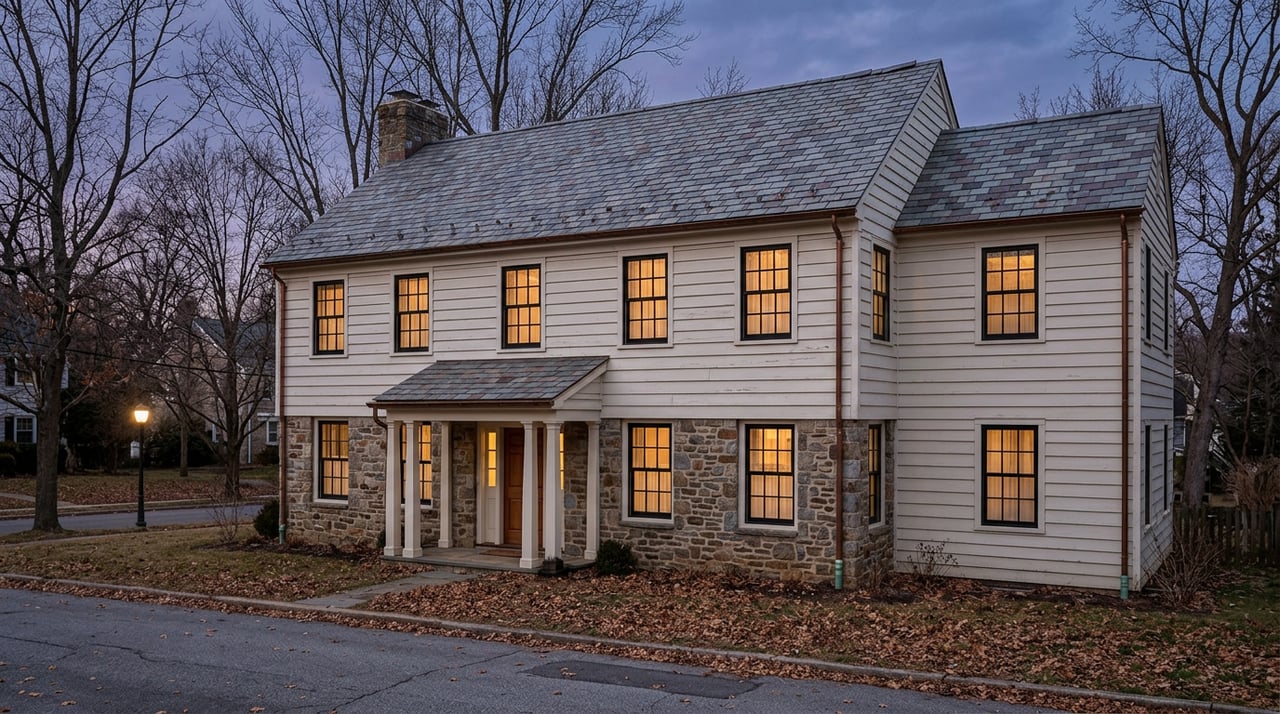
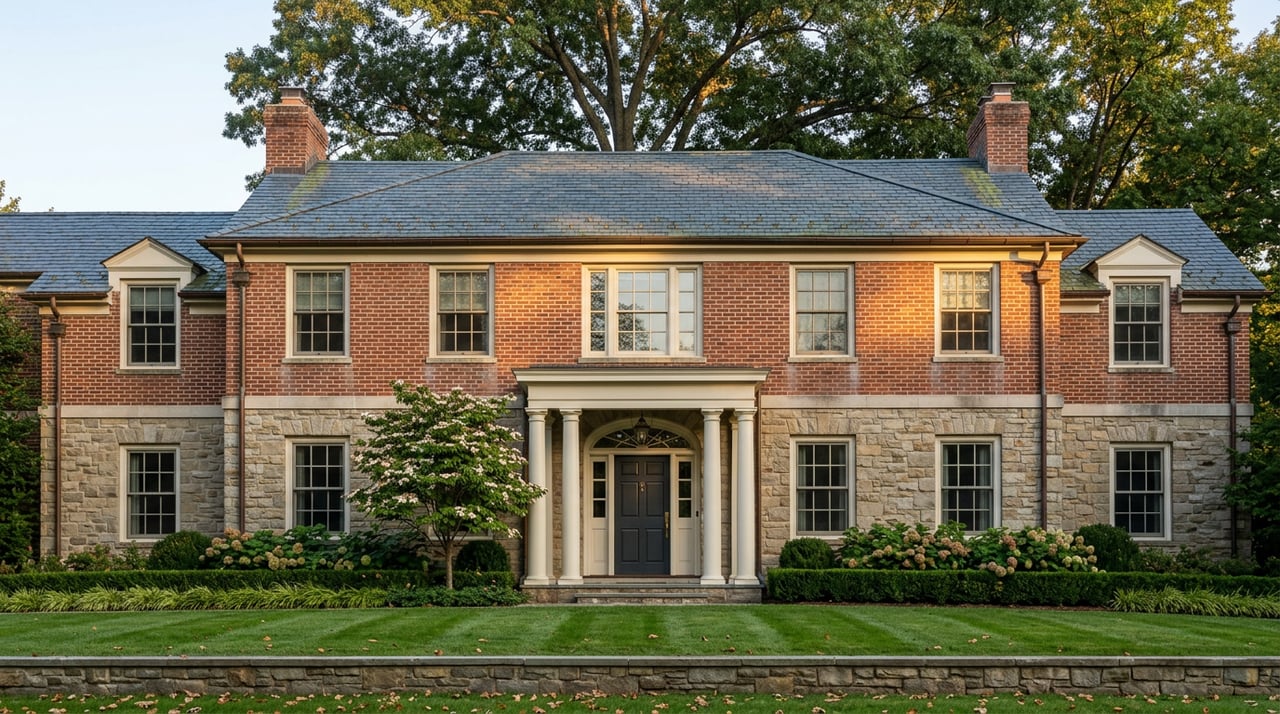
Every detail is approached with care, discretion, and a strong understanding of the market. Serving Easton, Western New Jersey, and Pennsylvania, BHHS Paul Ford Realtors guides each transaction with precision and a client-first mindset. Leveraging decades of experience, they anticipate challenges, provide tailored solutions, and deliver results that inspire confidence at every step.
BHHS Paul Ford Realtors
126 Bushkill St, Easton, PA 18042